
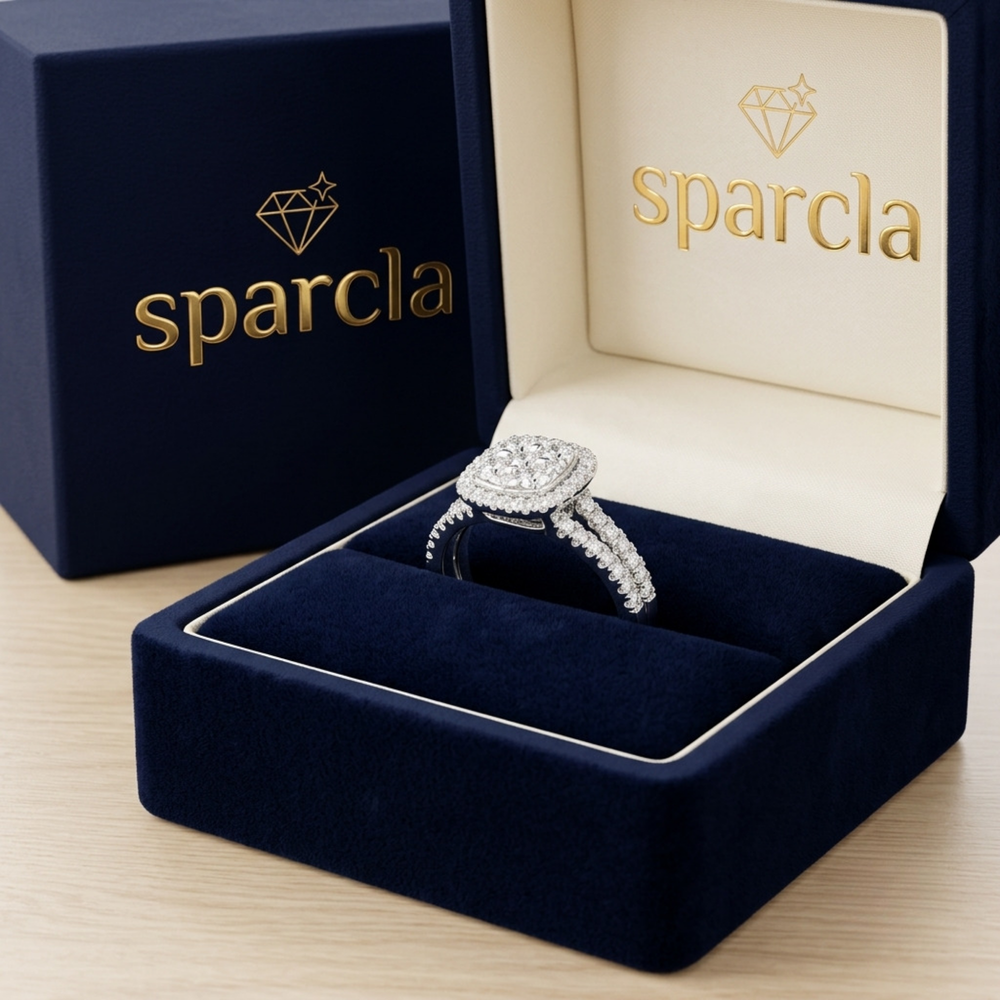

Choosing an engagement ring is an exciting moment—but with so many diamonds, styles, settings and metals available, knowing where to start can feel overwhelming.
Whether you're planning a surprise proposal or shopping together, understanding a few basics can make the experience much easier. Here are seven important engagement ring shopping tips for beginners.
1. Set a Comfortable Budget
Before browsing hundreds of beautiful rings, decide what you're comfortable spending.
There is no universal amount you have to spend on an engagement ring. Your budget should reflect your personal financial situation and the features that matter most to you.
Think about where you'd rather prioritize your budget:
- A larger center diamond
- Higher diamond quality
- A particular diamond shape
- More accent diamonds
- A premium metal
- A custom design
The goal is to find a ring that feels special without creating unnecessary financial pressure.
2. Understand the 4Cs of Diamonds
If you're buying a diamond engagement ring, learning the 4Cs—Cut, Color, Clarity and Carat Weight—is one of the best places to start. The 4Cs are the internationally recognized framework developed by GIA for describing diamond quality.
Cut
Cut refers to how well a diamond's facets interact with light. A well-cut diamond can have impressive brightness, sparkle and fire.
Color
For most diamonds, color is graded from D to Z, with D representing the highest colorless grade in this scale.
Clarity
Clarity describes the presence of internal characteristics called inclusions and surface characteristics called blemishes.
Carat Weight
Carat measures a diamond's weight—not simply its visual size. Two diamonds with the same carat weight can look different depending on their shape and proportions.
Tip: Don't focus on just one C. Consider how all four work together within your budget.
3. Choose the Right Diamond Shape
Your partner's personal style can help guide the diamond shape you choose.
Some popular options include:
- Round – classic and brilliant
- Oval – elegant and elongated
- Emerald – sophisticated and understated
- Radiant – modern with strong sparkle
- Cushion – soft and romantic
- Pear – distinctive and graceful
- Marquise – dramatic and elongated
- Princess – clean and contemporary
- Asscher – geometric and vintage-inspired
- Heart – romantic and symbolic
Diamond shape describes the stone's outline, while cut describes how its facets are arranged.
If you're unsure, look at the jewelry your partner already wears. Their favorite shapes and styles can provide useful clues.
4. Select the Right Ring Setting
The setting holds the center gemstone and contributes significantly to the ring's overall appearance.
Popular engagement ring styles include:
Solitaire
A single center stone creates a timeless, elegant look.
Halo
Smaller stones surround the center stone for additional sparkle.
Three-Stone
A center stone is paired with two side stones, creating a meaningful three-stone design.
Pavé
Small diamonds are set closely along the band to create a sparkling appearance.
Bezel
Metal surrounds the edge of the gemstone, creating a sleek look and additional protection.
Your lifestyle matters too. For someone with an active lifestyle, a setting that offers more protection may be worth considering.
5. Choose the Metal
The metal can completely change the personality of an engagement ring.
💛 Yellow Gold
Warm, traditional and timeless.
🤍 White Gold
Clean and contemporary.
🌹 Rose Gold
Warm, romantic and distinctive.
✨ Platinum
Naturally white and a popular choice for fine jewelry.
When selecting a metal, think about your partner's existing jewelry. If they usually wear yellow gold, for example, a yellow-gold engagement ring may naturally fit their style.
The metal can also affect how a diamond's color appears, so it's worth considering the diamond and setting together.
6. Get the Correct Ring Size
A beautiful engagement ring should also be comfortable.
If you're shopping together, getting professionally measured is the simplest approach.
If you're planning a surprise proposal, you may be able to discreetly borrow one of your partner's existing rings and have a jeweler help estimate the size. GIA also recommends checking ring size before purchasing because resizing can be more complicated for certain designs.
Remember: ring width, design and finger shape can affect how a ring feels and fits.
7. Ask About Certification and Customization
Before purchasing a diamond, ask what documentation accompanies it and what information is provided about its quality.
A diamond grading report can provide important information about characteristics such as the 4Cs and help you understand what you're purchasing.
You can also ask about customization.
Depending on the jeweler, you may be able to personalize:
- Diamond shape
- Diamond size
- Diamond quality
- Metal
- Ring setting
- Side stones
- Engraving
- Overall design
A custom engagement ring can be especially meaningful when you want something created around your own story.
💎 Final Thoughts
Buying an engagement ring doesn't have to be overwhelming.
Start with a comfortable budget, learn the basics of diamond quality, consider your partner's personal style, and choose a setting and metal that fit their lifestyle.
Most importantly, don't feel pressured to follow someone else's definition of the "perfect" engagement ring.
The perfect ring is the one that feels meaningful to you and your partner.
At Sparcla Fine Jewellery, explore engagement ring designs featuring diamonds, gemstones, different precious-metal options and customizable styles—created for the moments that become part of your story.
✨ Your story is unique. Your engagement ring should be too.
Explore Sparcla Fine Jewellery → https://sparcla.com/
0 comments